- By Dick Fleming on Sunday, July 19th, 2026 in Fabric & Furniture Protection. No Comments
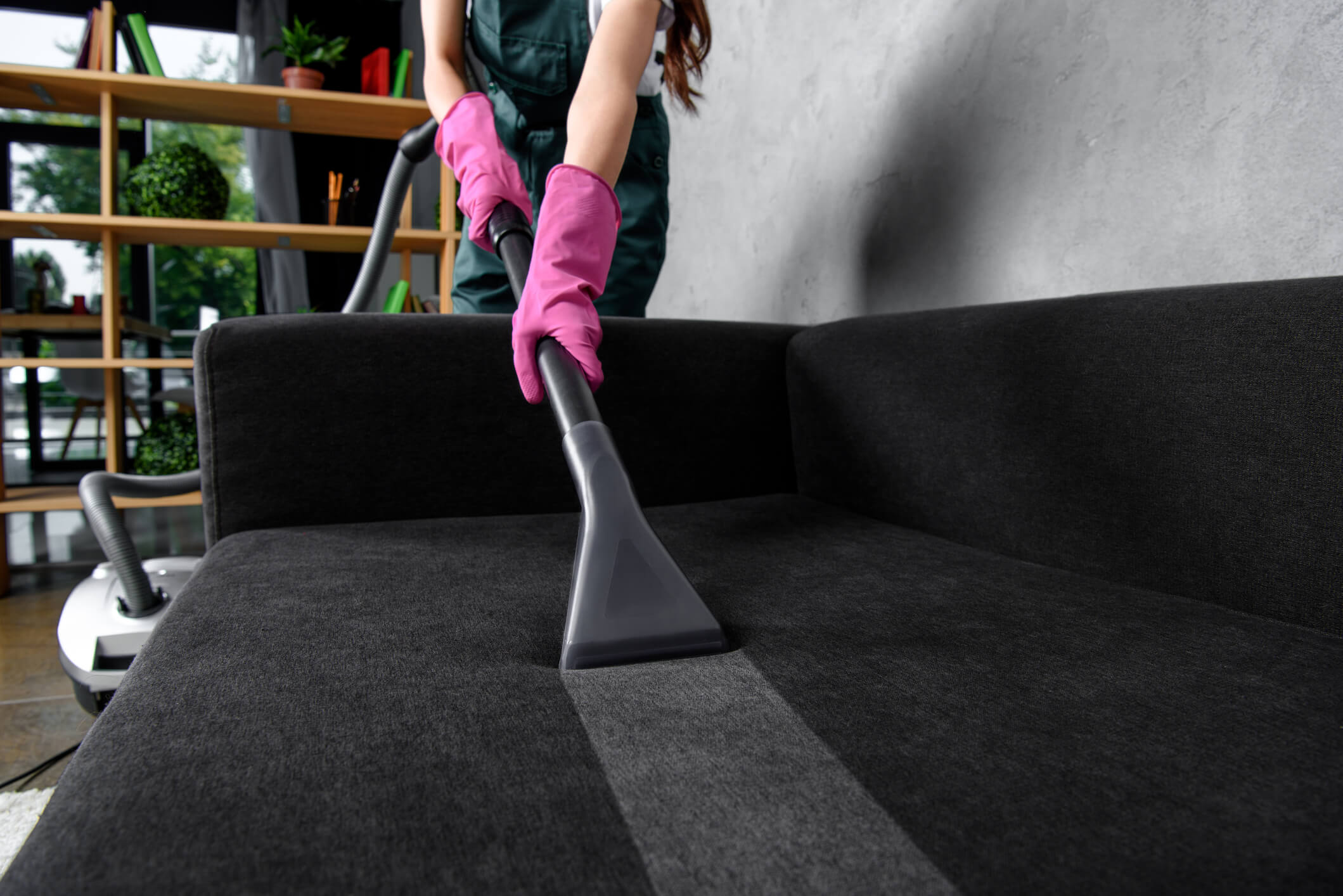
There is a reason your sofa and upholstered chairs feel warmer and more comfortable than a wooden chair or a glass table. The texture of woven and knitted fabric creates millions of tiny fiber interlockings that trap air, providing insulation and that characteristic softness. The same structural property that makes upholstered furniture feel comfortable also makes it the most effective particle trap in your home, and that’s where the health conversation starts, at a level most articles on this topic never reach.
Hard surfaces in your home, tile floors, wood tables, and glass counters, are relatively easy to keep clean because particles that settle on them sit on top of the surface where they can be wiped away. The fiber structure of upholstery works differently. Particles that contact a woven fabric don’t just sit on the surface; they migrate into the fiber matrix through mechanical action, which, in the case of a sofa, means every time someone sits down, stands up, or shifts position. The compression and release of the cushion act like a pump, drawing particles in on compression and releasing them into the air on rebound.
This is why research on indoor particulate matter consistently identifies upholstered furniture as a major secondary emission source: settled particles in fabric are re-entrained into breathing air during normal use. A hard floor or a smooth countertop doesn’t do this. The physics of fabric makes upholstery uniquely effective at both accumulating contaminants and periodically releasing them where people breathe.
Understanding this accumulation mechanism clarifies why the health risks of dirty upholstery aren’t simply about visible dirt. The contaminants most relevant to human health are largely invisible and distributed throughout the fiber matrix rather than sitting on the surface where they can be easily seen or detected.
Dust mites and their byproducts represent the most consistently documented health concern associated with upholstered furniture. Dust mites are microscopic arthropods that feed primarily on shed human skin cells, which accumulate in fabric at a rate of millions per week from normal household activity. The Asthma and Allergy Foundation of America identifies dust mite allergens as one of the most common triggers for asthma and allergic rhinitis. The biological component that triggers these reactions isn’t the mites themselves but their fecal particles and body fragments, which are small enough to become airborne during normal furniture use and reach the lungs directly.
The relevant scale here is worth understanding. A single gram of house dust, roughly the amount a vacuum would collect from a square foot of fabric, can contain thousands of dust mites. The fiber matrix of an upholstered sofa provides ideal conditions: warmth, humidity from body contact, and a continuous food source from shed skin. The accumulation that occurs over months and years of normal household use, in the absence of regular deep cleaning or protective treatment, represents a significant biological load concentrated in exactly the furniture people press their faces and bodies against regularly.
Mold and mildew spores colonize upholstery in environments where moisture reaches the fabric, whether from beverages, humid air, or perspiration during sustained contact. The fiber matrix retains moisture long after the surface feels dry to the touch because the core of dense upholstery fabric doesn’t air-dry at the same rate as the surface. Mold colonies embedded in damp upholstery release spores continuously and produce volatile organic compounds that produce the characteristic musty odor associated with older furniture. The CDC’s guidance on indoor mold identifies respiratory symptoms, skin irritation, and aggravation of asthma as common consequences of sustained mold exposure, effects that apply equally to residential environments.
Bacterial accumulation in upholstery occurs through skin contact, food and beverage spills, pet contact, and airborne deposition. Bacteria embedded in fiber matrices are shielded from light and air circulation that inhibit growth on open surfaces, creating a microenvironment within the fabric. Studies on surface bacterial contamination in residential settings consistently find higher bacterial loads on soft surfaces than on hard surfaces in the same room, precisely because the fiber structure provides shelter from the environmental factors that limit bacterial survival on hard surfaces.
Volatile organic compounds from outside sources, including vehicle exhaust, industrial emissions, and outdoor particulate matter, attach to clothing and are transferred to upholstery through normal sitting and contact. Unlike hard surfaces from which VOCs can be wiped, fabric absorbs and retains these compounds at a molecular level, where they off-gas slowly back into indoor air over extended periods. This mechanism makes upholstery a reservoir for outdoor air pollutants in a way that other indoor surfaces typically are not.
The health effects of contaminated upholstery are not evenly distributed across household members. Three groups face substantially elevated risk from the same level of upholstery contamination that an otherwise healthy adult might tolerate with only mild effects.
Children spend disproportionate time in close contact with upholstered furniture, including floor-level cushions and sofas used for play, sleep, and reading. Children also breathe at a lower height than adults, putting them closer to the particle-emission zone when using furniture. Their immune systems are less developed, making allergenic sensitization from sustained exposure a real risk in early childhood that can establish lifelong allergic reactivity.
Adults with asthma or allergic rhinitis experience direct symptom amplification from the specific allergens most concentrated in upholstery: dust mite proteins and mold spores. The relationship between household dust mite load and asthma attack frequency is among the best-documented in residential indoor air quality research.
Elderly household members and immunocompromised individuals face elevated risk from the bacterial and mold components specifically, where the protective function of a healthy immune response is reduced, and the consequences of sustained biological exposure are more severe.
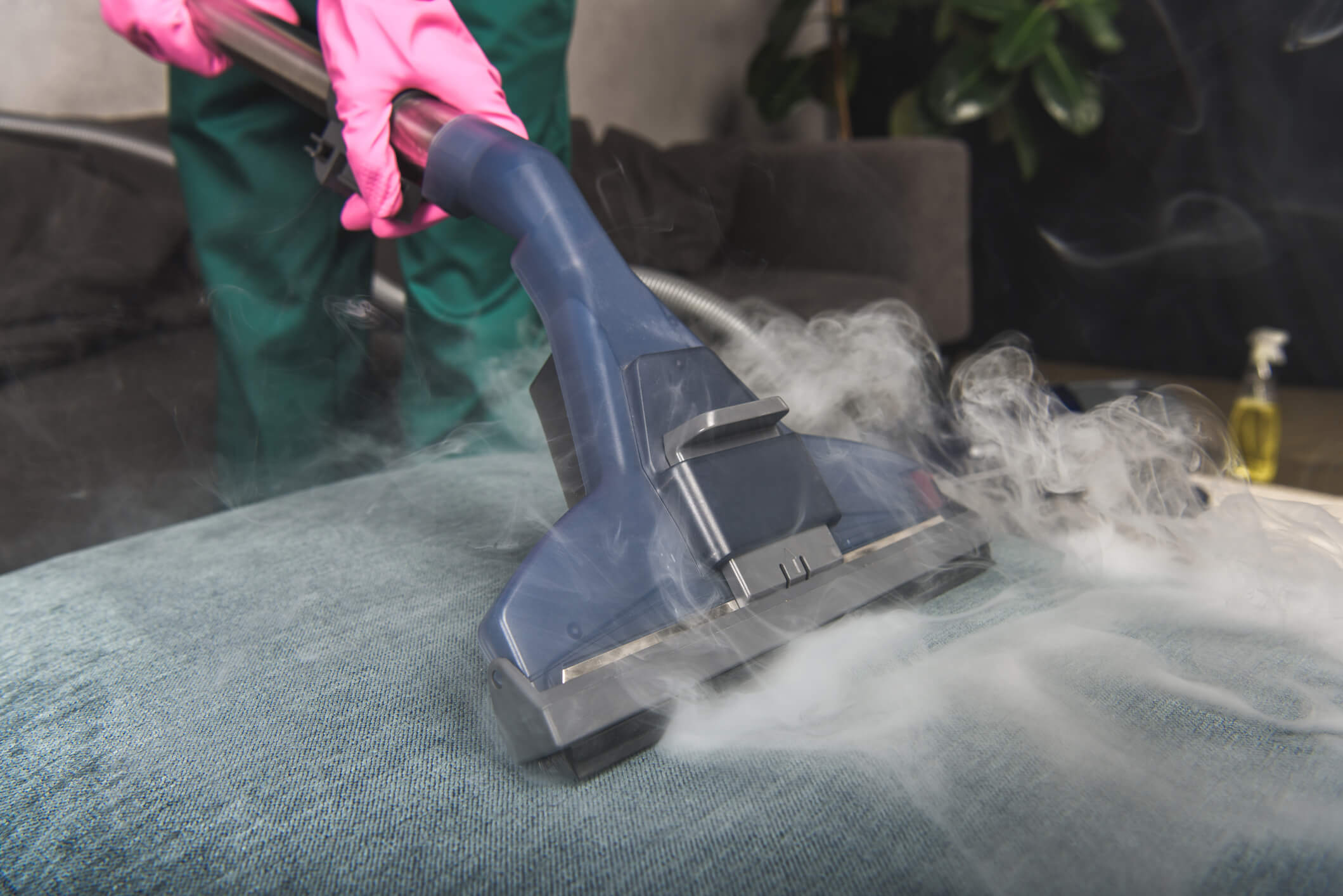
The standard recommendation in every article on this topic is “clean your upholstery regularly.” That’s correct and worth doing, but it addresses contamination that has already accumulated rather than the rate of accumulation itself.
The more durable approach is to reduce the rate at which the fiber matrix absorbs and retains contaminants in the first place. A fiber that has been treated at the molecular level to reduce surface energy, altering how liquids, oils, and particles interact with the fiber surface, accumulates contamination more slowly and releases what does accumulate more readily during cleaning. This is the distinction between a surface treatment that sits on top of the fiber and wears away, and a molecular-level treatment that changes how the fiber itself behaves over time.
At Ultra-Guard, the professional fabric protection treatment we apply bonds at the fiber level rather than coating the surface, producing a fiber that resists liquid absorption and particulate adhesion over the long term. A treated fiber isn’t immune to accumulation, but it accumulates at a lower rate, releases more readily during cleaning, and maintains a lower baseline contamination level over the months and years between professional cleanings. For households with children, pets, allergy sufferers, or elderly members, the health benefit of a lower baseline contamination level in upholstery is directly linked to reduced daily exposure for those household members.
Your upholstered furniture is one of the most frequently used surfaces in your home—and one of the easiest places for allergens, dust, and contaminants to accumulate. Protecting those fibers today can help reduce buildup tomorrow.
Ultra-Guard’s advanced fabric protection technology helps preserve the appearance of your furniture while making everyday maintenance easier and supporting a cleaner indoor environment for your family.
Ready to protect your investment? Contact Ultra-Guard today to schedule your fabric protection service or speak with one of our specialists about the best solution for your home.
The generally recommended interval for professional upholstery cleaning in a typical household is every 12 to 18 months. Households with children, pets, allergy sufferers, or heavy furniture use may benefit from more frequent cleaning, in the 6-to 12-month range. Professional cleaning removes accumulated contamination in the fiber matrix that routine vacuuming cannot reach, addressing the biological load that builds up between sessions.
Regular vacuuming removes some surface-level particles, including dust mite debris, and reduces the food supply available to mites by removing skin cell accumulation. However, it does not remove embedded mites or their allergens from the fiber matrix. HEPA-filter vacuums are more effective than standard vacuums at retaining captured particles rather than redistributing them into the air, but professional extraction cleaning is required for a meaningful reduction in deep-fiber contamination.
Symptoms that improve when spending time outside the home but return indoors, including nasal congestion, sneezing, itchy eyes, and asthma symptoms, are a common pattern in households with elevated upholstery allergen loads. Persistent musty odor from furniture is a specific indicator of mold colonization within the fiber matrix. If symptoms correspond to time spent on specific furniture, that furniture should be professionally cleaned and inspected.
Molecular-level fiber protection that reduces the rate of liquid absorption and particulate adhesion produces a fiber that accumulates contaminants more slowly and releases them more readily during cleaning. Over the months and years between professional cleanings, this lower accumulation rate translates to a lower baseline biological load in the fabric, which is directly relevant to the allergen, bacterial, and mold exposure that household members receive from daily contact with that furniture.
Yes, for two reasons. Pet dander, composed of shed skin flakes from animals, is one of the most potent allergens for sensitized individuals and accumulates in upholstery through direct pet contact and airborne deposition. Pet dander particles are very small and adhere readily to fiber surfaces, making them difficult to remove through vacuuming alone. Additionally, pets that spend time on furniture introduce outdoor contaminants, biological material, and moisture from their coats that accelerate the accumulation processes described above.