- By Dick Fleming on Friday, October 2nd, 2026 in Fabric & Furniture Protection. No Comments
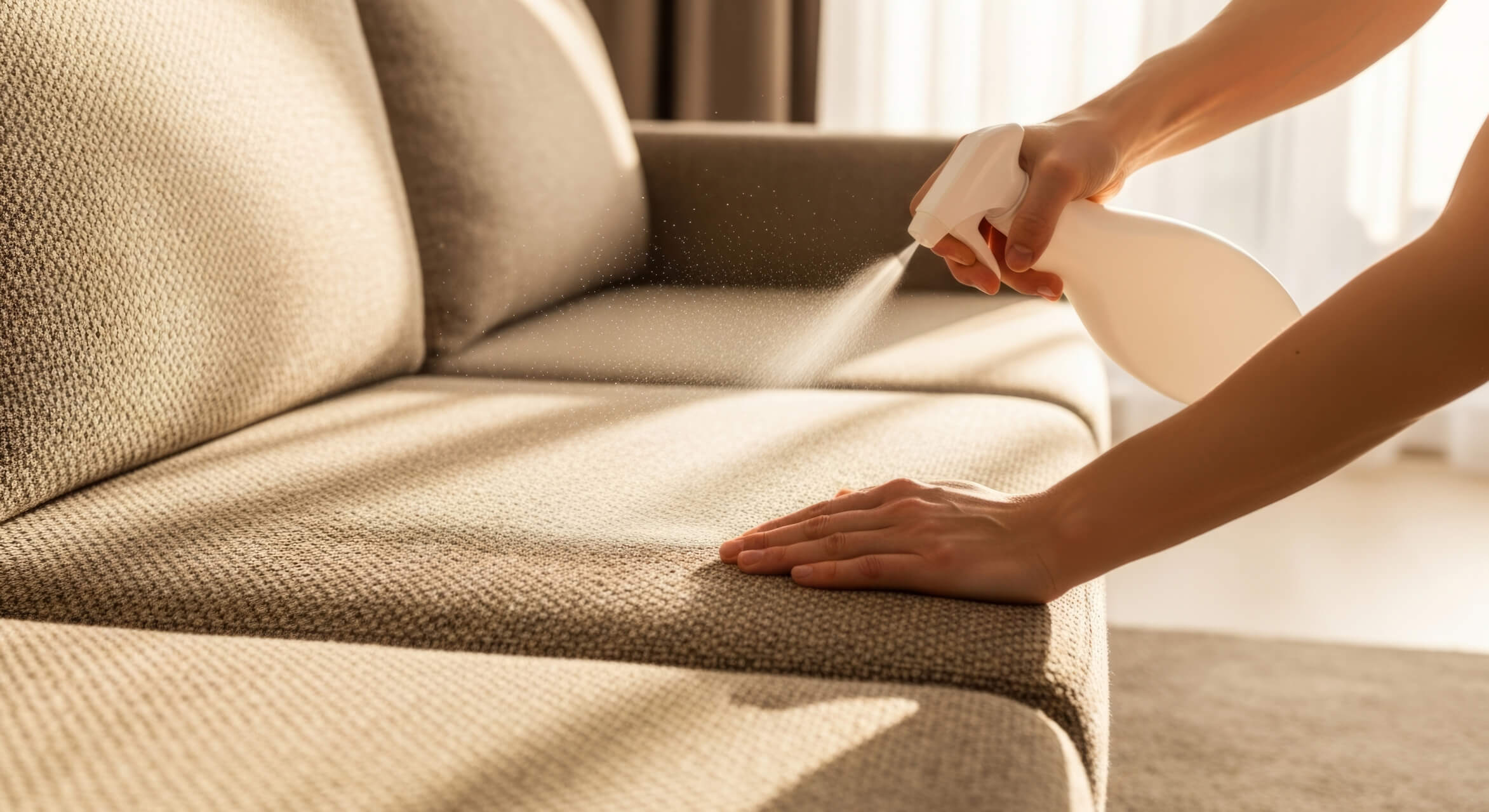
Ask five people how long fabric protection lasts on furniture, and you will hear five different answers. That’s because protection doesn’t switch off on a date. It wears like tire tread: thinner where you use the piece most, and fine where you don’t. The good news is that you can check your own furniture in a couple of minutes and take simple steps to slow the wear.
This guide walks you through it: the typical lifespans, how to test what you have, eight habits that make protection last longer, and how to decide when it’s time to reapply.
These are general ranges for ordinary household use. Your sofa could fall on either side, depending on how you use it.
| Type of protection | Typical lifespan | Good to know |
|---|---|---|
| Factory or showroom treatment | About a year of real use, sometimes less | Applied once and rarely re-checked. |
| Store-bought aerosol spray | 6 to 12 months | Many labels suggest reapplying about twice a year on heavily used seating. |
| Professionally applied surface protector | Roughly 1 to 3 years | Depends on the product, even coverage, and wear. |
| Bonded polymer protection | Designed to last the life of the fabric | The protector attaches to the fiber instead of sitting on top of it. |
The wide spread comes from three things: what the protector is made of, how evenly it was applied, and how hard the furniture works. A treated armchair in a guest room and a treated sofa in a busy family room can differ by years.
Your timeline starts with knowing what’s on the fabric. Check these in order:
Also read the care tag. Cleaning codes tell you what you can safely use on the fabric: W (water-based cleaners), S (solvent-based cleaners), WS (either), and X (vacuum only). This matters for the test in Step 2 and for every cleaning you do afterward.
This is a simple home version of what textile labs do with standardized water-repellency testing, such as the methods published by AATCC. It won’t give you a lab number, but it shows you where your protection stands.
The most useful comparison is between your three spots, not against a perfect result.
Two things to keep in mind. First, beading isn’t the only sign of protection. Tighter weaves bead better than loose ones, and chenille or some velvets may never bead even when treated. What matters just as much is whether you can clean up a spill. Second, use the least-used spot as your baseline, so you’re judging the fabric’s behavior, not an ideal.
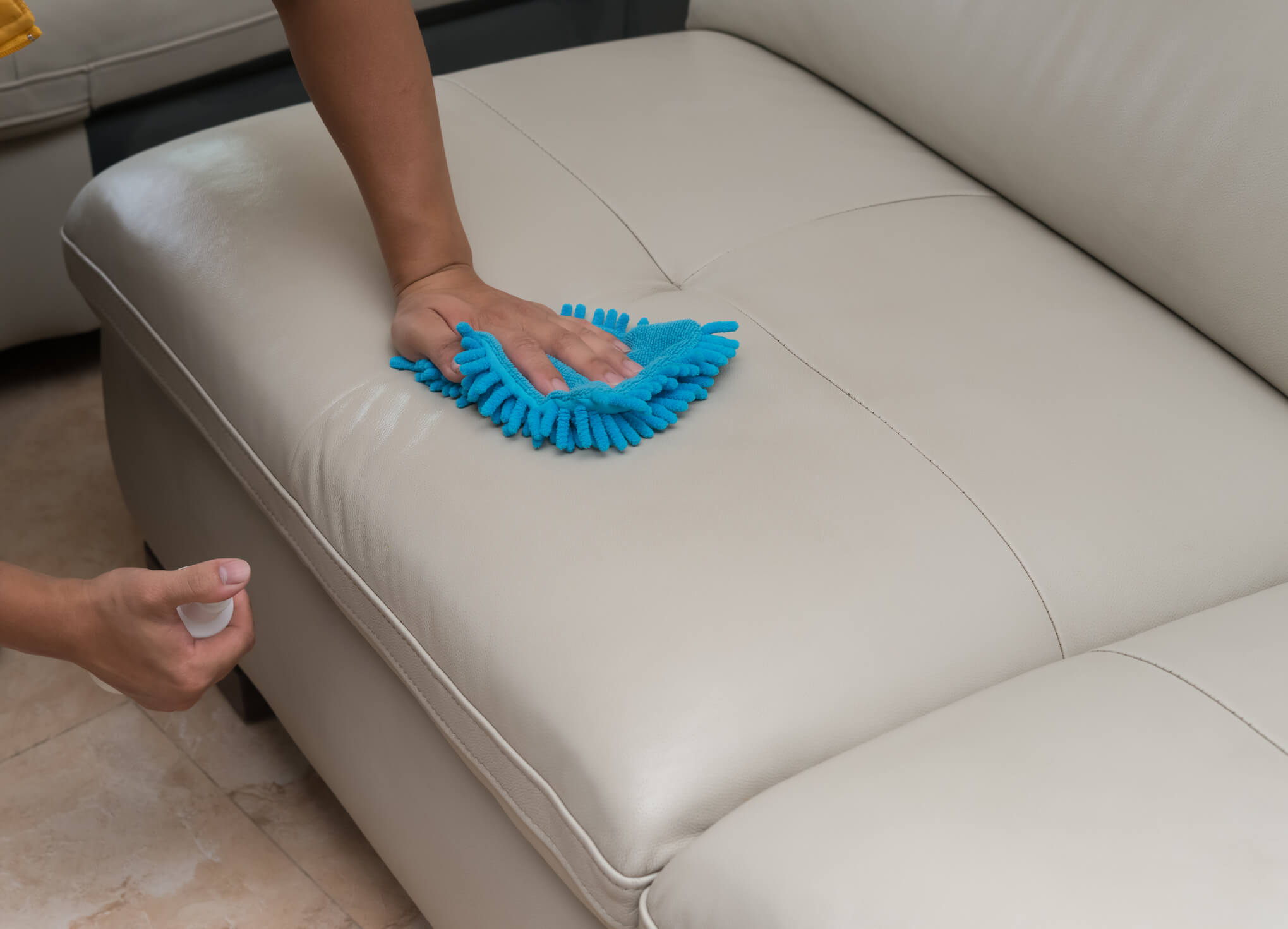
Reapply when the evidence says so, not when a calendar does. Good triggers include:
If you spray it yourself, apply even coats, follow the label on drying time, and don’t layer it over an unknown product; mixing chemistries can leave a patchy finish. Some older protectors relied on fluorochemicals, a family of compounds regulators continue to study, and the U.S. Environmental Protection Agency publishes current information on PFAS if you want to check what’s in a product you’re considering.
No protection is absolute. Acids, bleach, and dyes can push through any treatment, and fabrics that don’t bead can still absorb liquids. When it happens:
If your water check is inconclusive, or you want an experienced eye on a piece you care about, the team at Ultra-Guard can help. A professional fabric protection application starts with an assessment and cleaning, then covers the whole piece evenly. You can also see where we work on our service center locations page, or read how our spot-call warranty handles spills that get through.
Store-bought aerosol protectors such as Scotchgard are usually treated as a 6 to 12-month product on furniture people use daily, and many labels suggest reapplying about twice a year for heavy use. Even coverage matters as much as the product.
Reapply when the water check tells you to. As a starting point, aerosol sprays typically need reapplying every 6 to 12 months, and professional surface protectors every 1 to 3 years. Bonded formulas should only need attention if a spot fails the check.
Correct, gentle cleaning does little harm. Friction and harsh cleaners do more damage, especially to surface-type protectors. Bonded formulas are designed to withstand spot cleaning and routine maintenance.
No. It slows absorption, giving you time to blot, and makes stains easier to remove during cleaning. Acids, bleach, and dyes can still go through any protection.
Drying commonly takes several hours. Our formula dries in about 6 to 7 hours, and waiting overnight allows complete curing. For other products, follow the label.
Generally yes, because protection works best on clean, unsoiled fiber. Many stores don’t offer it at purchase, so people often arrange it after delivery.